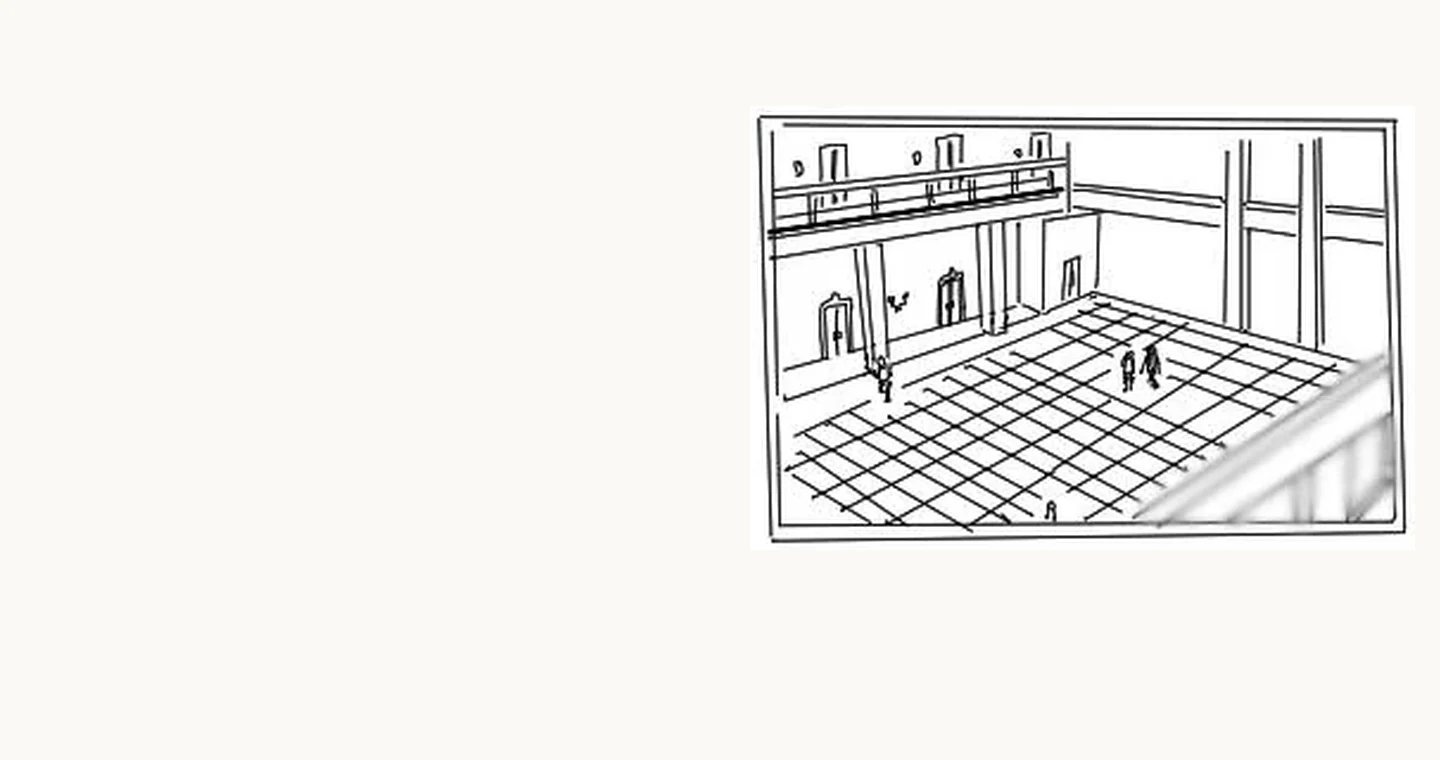
Two people in a tiled hall take up less space in my drawing than the railing at the bottom right. I could leave their faces blank and still tell where I was standing. That was the first of three small drawings I made with Director Study Tool, an app I built to put a single film reference beside my sketchbook.
A doomscroll alternative that starts with one frame
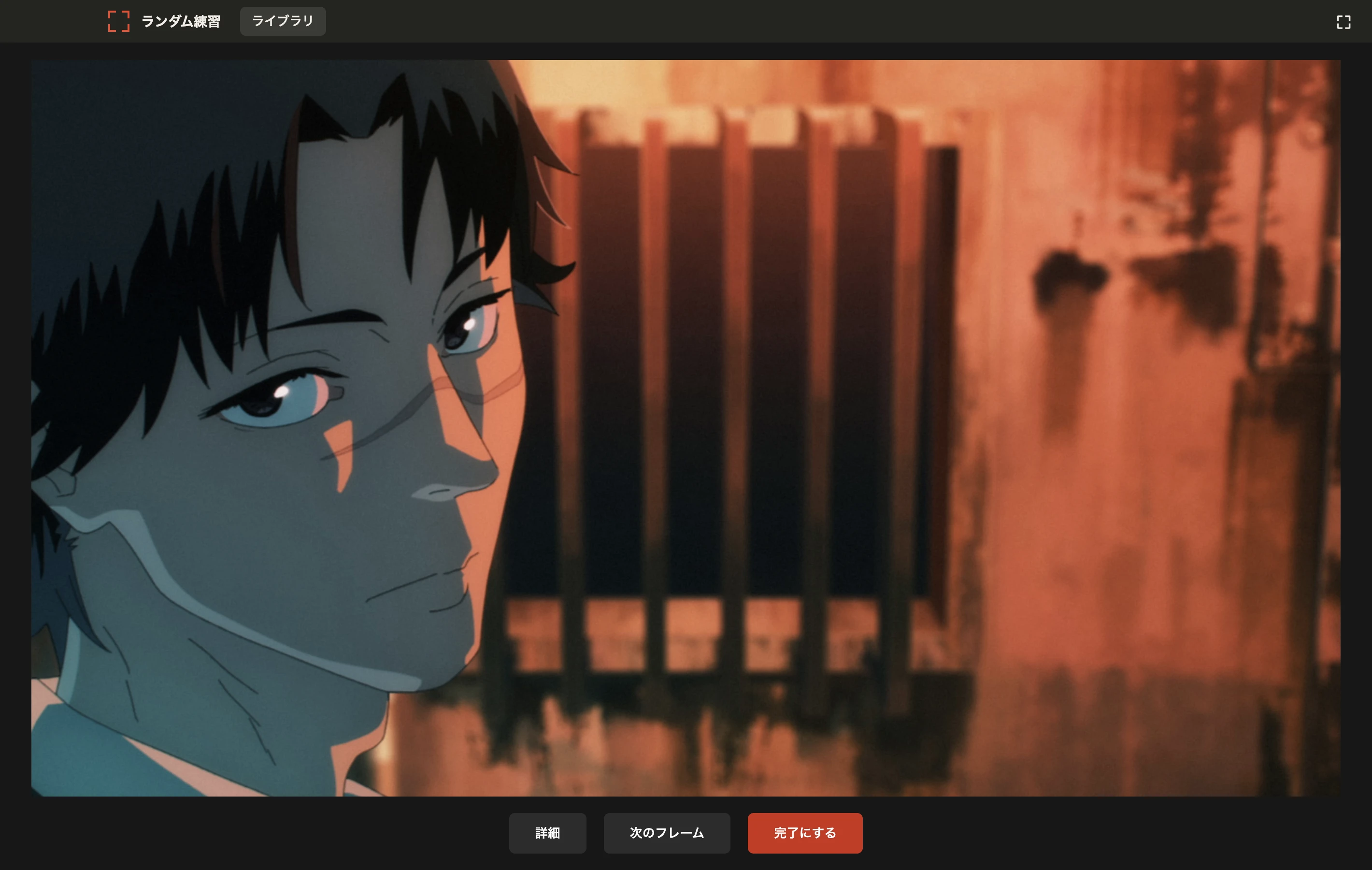
I wanted to keep the small pleasure of opening something and finding a surprise. On launch, Practice Random picks one unfinished reference across my projects. I can take it fullscreen, put the pointer aside and draw on paper or in another app. The picture stays there until I act. My stopping rule is one thumbnail. Once it is on the page, I can mark the frame done and close the app.
Choosing what goes beside the sketchbook
The library is where I choose the company I want to keep. I have Naoko Yamada’s A Silent Voice and Liz and the Blue Bird, Christopher Nolan’s Interstellar and the three Dark Knight films, and Quentin Tarantino’s Inglourious Basterds. The television shelves include Ryū Nakayama’s Chainsaw Man and the work of Pascal Charrue, Arnaud Delord and the Fortiche team on Arcane. Keeping live action beside animation lets a question about where to put a figure travel from one project to another. Universal film credits · Arcane production credits
I keep one project per title. Grid view lets me compare the balance of several frames at a glance. List view puts the study labels beside them. The default filter leaves unfinished drawings on the desk, and the completed filter brings back the references below. I can import an image with a rough note and ask Codex to organize it. Each record retains the source and shows whether its metadata is manual or Codex-organized.
What I look for before opening Details
In Vision, Hans P. Bacher and Sanatan Suryavanshi work through structural lines, framing and thumbnail composition. The exercise I took from it is to see how few marks I need to recover the camera position. My screenplay-to-shot-prompt workflow starts from the other end. I give a shot one story job, specify where the camera can stand, and name what occupies the near edge and what must remain visible beyond it. Vision, publisher’s page
For the hall I could write, “Look down past the railing at two people standing together. Leave enough floor around them to see how far away they are.” That gives me something I can check in a drawing. In Details I can read the observation, switch on a concept’s annotation layer, then go straight back to exactly the same frame. I like to make my own first guess while the notes are still hidden.

What a completion records
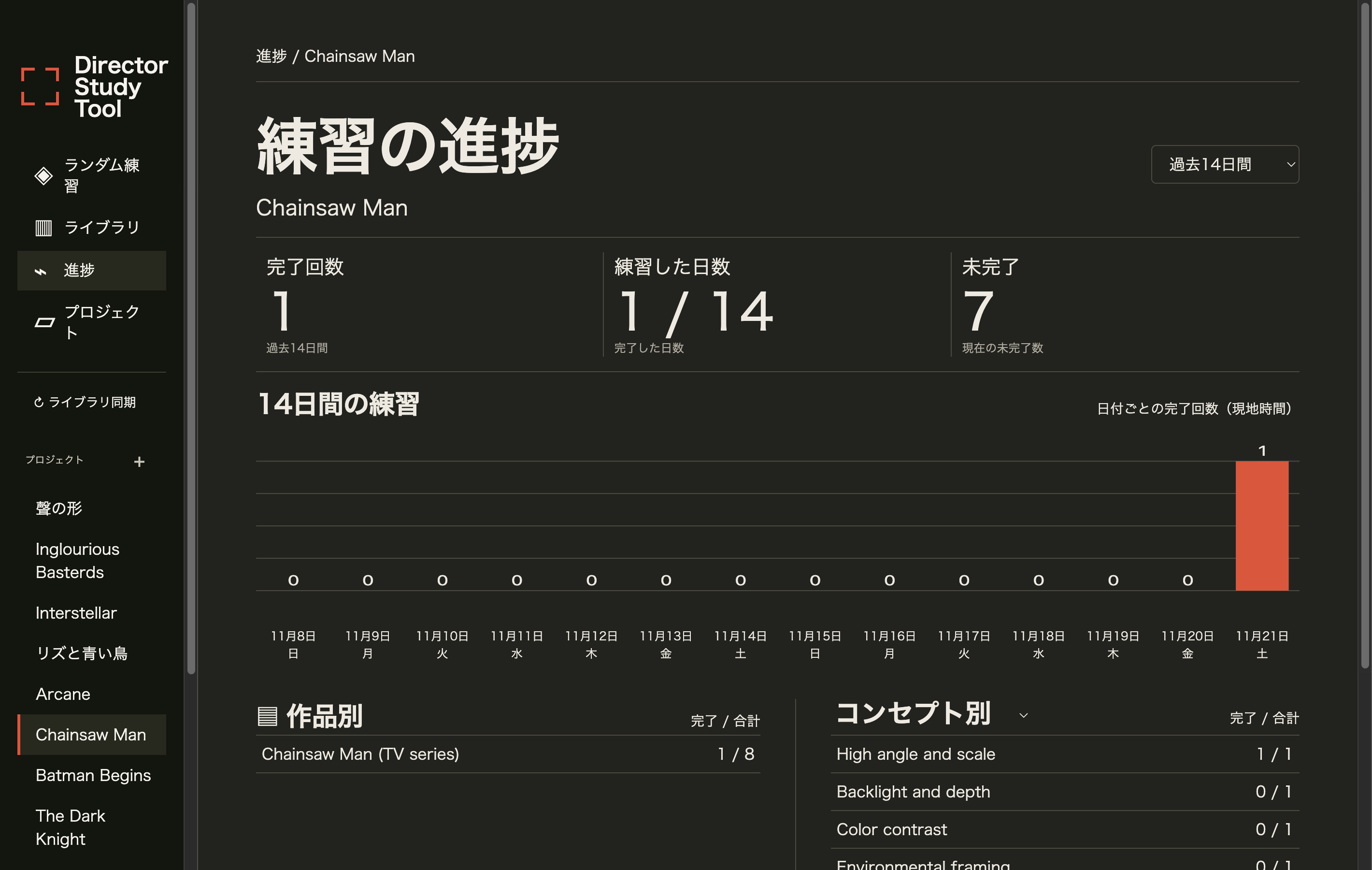
Marking a frame done records the time. In the Chainsaw Man project shown here, the last fourteen days contain one completion on one day. Seven references remain, and the high-angle study accounts for the one finished frame out of eight. The date tells me when I sat down to draw. To judge what I understood about the camera, I need to look at the drawing itself.
Three drawings from the same desk
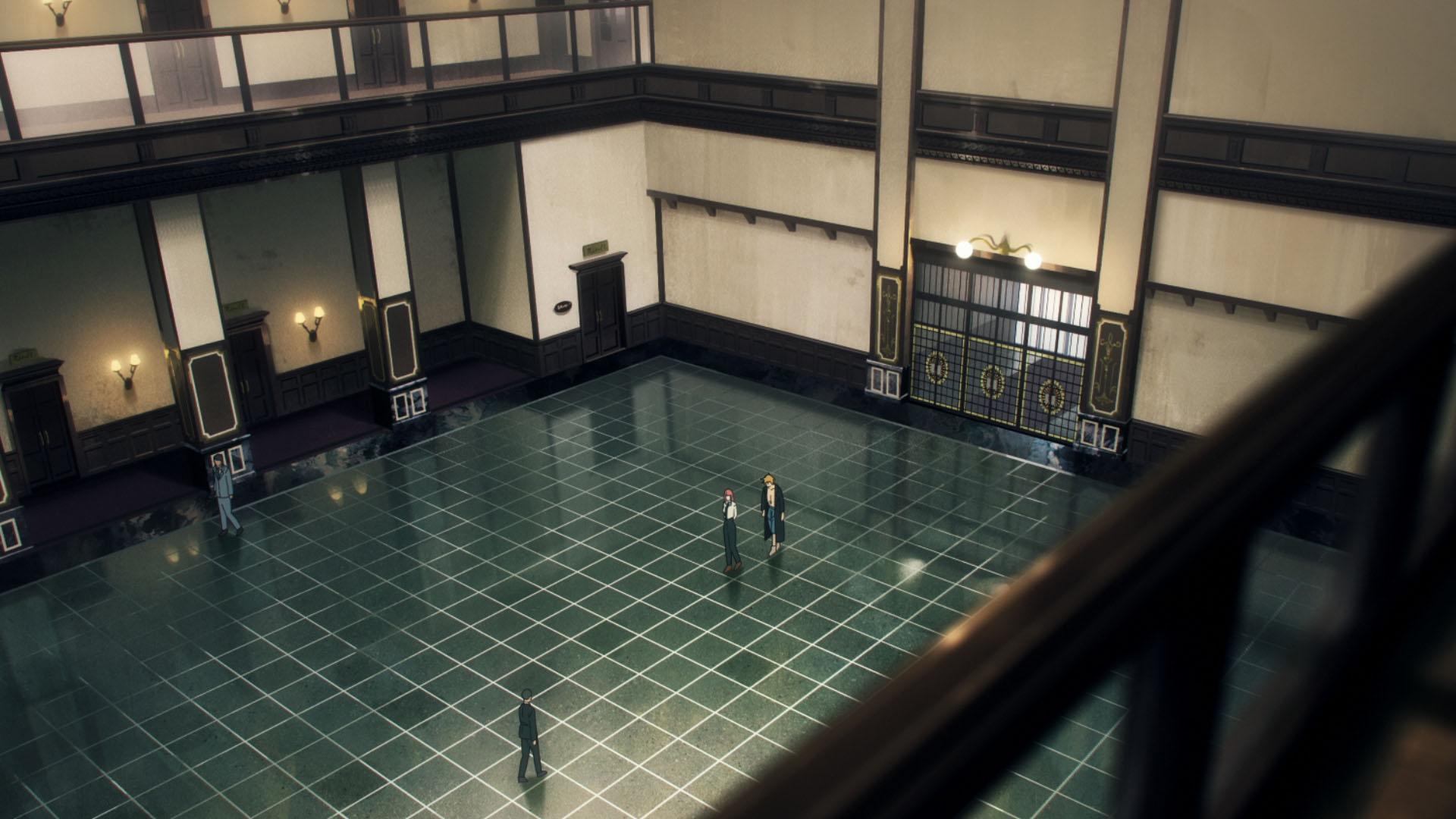
Chainsaw Man · The tiled hall
In the episode 2 still, the near railing crosses the lower right corner. The pair on the floor only comes up a few tiles. In my replay the wall corner and the pair are in place before I draw the grid. Even with a blank floor, the railing already puts me on a higher level. Once the grid goes in, it measures the distance. I crowded the nearest figure against the bottom edge and nearly lost it. Next time I would place that third mark when I place the pair.

Liz and the Blue Bird · The face at the right
The sweep of hair leaves an uneven patch of open space to the left of the face. Cover the features and that imbalance is still there. In my thumbnail I kept the face on the right and the horizontal strip behind it. Then I drew the whole collar. Compare the result with the reference and the crop has opened up. The shoulders now take some of the attention that the eyes held. For a matching reaction shot I would mark the eye line and the lower edge before drawing the mouth.


Batman Begins · A hand beneath the rock
The library files this one under lighting. For this pass I followed the outline of the rock down to the figure, then looked at the little interval between the raised hand and the face. My drawing keeps that gesture. It also puts the body close to the middle and clips the feet. In the reference photograph the figure stands farther right and the ground beneath him helps the cavern feel larger. Those differences are already there in the outlines, before the hatching appears in the replay.


Watch the borders as the drawings appear
Here are all three from start to finish. The hall reads from the railing inward, the face from the eyes outward, the cave from the gap around one hand. On the next sheet I want to put a small mark where each subject meets the border before I spend a line on a tile or a strand of hair.
